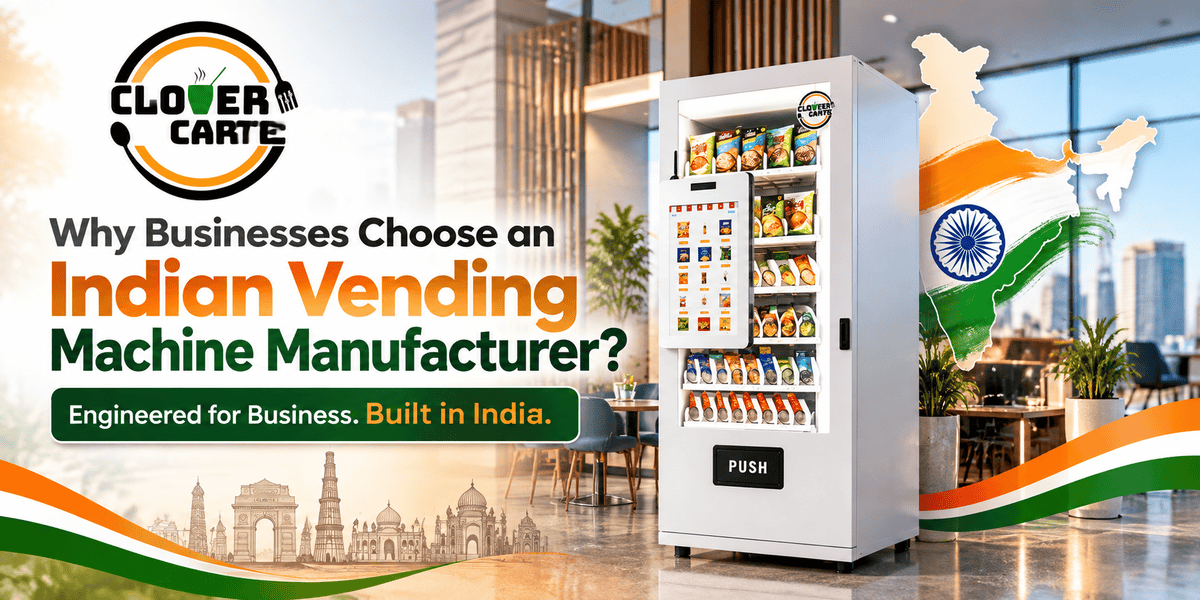
Businesses today are looking for smarter ways to sell products, improve customer convenience and manage daily operations efficiently. Vending machines are becoming a practical solution for offices, shopping malls, hotels, hospitals, educational institutions and other commercial spaces. As automated retail evolves, choosing the right manufacturing partner is a crucial business decision.
Working with an Indian vending machine manufacturer can offer several advantages, including customization, local communication, easier coordination and solutions designed around specific business requirements. For companies planning to introduce automated retail, an experienced manufacturer such as Clover Carte can help turn an idea into a practical vending solution.
1. Customized Vending Machines for Different Industries
Every business has different products, customers and operating requirements. A standard vending machine may not suit every application.
An Indian vending machine manufacturer can help businesses explore customized vending solutions based on product dimensions, machine capacity, available space, payment preferences and branding requirements.
For example, offices may need snack and beverage vending machines, while beauty brands may require machines that dispense cosmetics and personal-care products. Educational institutions and workplaces may also explore vending solutions for essential hygiene products.
Customized vending machines help businesses choose equipment that better matches their products, location and customer expectations.
2. Cost-Effective Manufacturing and Local Coordination
Budget is an important consideration when investing in vending technology. Working with a manufacturer in India can simplify communication, project coordination and discussions about machine specifications.
Local manufacturing may also help reduce certain logistics and import-related expenses, depending on the product design, components and sourcing arrangements. Businesses can discuss their budget, required features and expected operating conditions directly with the manufacturing team.
However, the total cost depends on the machine’s complexity, software integration, payment systems, production volume, and after-sales requirements. Instead of focusing solely on the initial purchase price, businesses should compare the total cost of ownership.
3. OEM and ODM Vending Machine Solutions
Businesses that want to launch their own vending products often look for OEM or ODM manufacturing services.
OEM, or Original Equipment Manufacturer, generally involves producing equipment according to a client’s specifications or design. ODM, or Original Design Manufacturer, typically involves developing a product using the manufacturer’s existing design capabilities, with customization depending on the agreement.
These options can help startups, retailers, distributors and established brands explore vending machine opportunities without developing every component independently.
Clover Carte offers OEM/ODM manufacturing capabilities for businesses looking to develop customized vending and automated retail solutions. The right model depends on the buyer’s design requirements, intellectual property arrangements, production needs and budget.
4. Smart Technology and Cashless Payments
Modern vending machines can do much more than just dispense products. Depending on their configuration, they may support digital payment systems, touchscreen interfaces, connected monitoring and inventory-related insights.
Cashless payment options can make purchasing more convenient for customers who prefer digital transactions. Connected systems may also help operators monitor selected machine information remotely and identify when restocking or maintenance is required.
When choosing a smart vending machine manufacturer in India, businesses should confirm which payment methods, connectivity features, software integrations and reporting capabilities are actually supported by the proposed model.
Selecting suitable technology from the beginning can help businesses build a more convenient and manageable vending operation.
5. Solutions Designed for Indian Business Environments
Vending machines may operate in corporate offices, factories, colleges, hospitals, transport locations and retail spaces. Each environment presents different requirements for capacity, product selection, security, accessibility and maintenance.
A manufacturer that understands the intended application can help businesses evaluate these practical considerations before production begins.
For example, a machine installed in a busy office may require different capacity and dispensing arrangements from a compact machine used for cosmetics or personal-care essentials. The design should reflect the products being sold and the conditions in which the machine will operate.
6. Better Communication and After-Sales Coordination
A vending machine is a long-term business asset, so support matters beyond the initial purchase. Installation guidance, troubleshooting, spare-parts availability, software support and maintenance arrangements can all influence operational performance.
Working with an Indian manufacturer may make technical discussions and project follow-ups easier to coordinate. Nevertheless, businesses should verify the manufacturer’s actual service coverage, response times, warranty terms and support commitments before placing an order.
A clear agreement helps both parties understand their responsibilities and reduces uncertainty after installation.
7. Opportunities for Business Growth and Brand Visibility
Vending machines allow businesses to make products available in selected locations without requiring a conventional staffed retail counter at every point of sale. Depending on the location and operating model, they can support extended access to products and create additional customer touchpoints.
Brands can also use customized machine designs, product displays and brand-specific interfaces to maintain a consistent identity. Potential applications include beverages, snacks, beauty products, personal-care essentials and other suitable packaged goods.
Success still depends on location, customer demand, pricing, product availability and operating costs. Choosing the right machine is one part of building a sustainable automated retail strategy.
Why Choose Clover Carte for Vending Machine Manufacturing?
Clover Carte develops smart vending and automated retail solutions for businesses with different product and operational requirements. Its offerings include beverage vending machines, snack vending machines, compact vending solutions, and cosmetic vending machines, alongside capabilities for OEM/ODM manufacturing and customization.
Businesses exploring a vending project can discuss their application, product range, machine configuration and technology requirements to identify a suitable approach.
Visit Clover Carte to explore its vending machines and manufacturing solutions.
Conclusion
Businesses choose Indian vending machine manufacturers for a combination of customization, local coordination, technology options and application-specific design. The right manufacturing partner can help businesses evaluate their requirements, select suitable features and plan for long-term operation.
Before making a decision, compare machine specifications, payment compatibility, warranty coverage, maintenance support and total ownership costs. With careful planning and the right partner, vending machines can become a useful part of a modern automated retail strategy.
Looking for a customized vending machine for your business? Explore Clover Carte’s solutions and discuss your requirements with its team.
FAQs
Why should businesses choose an Indian vending machine manufacturer?
Businesses can benefit from easier coordination, customization options, local technical communication and solutions tailored to their requirements. Actual cost and support benefits depend on the manufacturer and project.
Can vending machines be customized for different products?
Yes. Depending on the manufacturer’s capabilities, vending machines can be designed for snacks, beverages, cosmetics, personal-care products and other suitable items.
What is the difference between OEM and ODM vending machines?
OEM manufacturing generally follows the buyer’s specifications or design, while ODM manufacturing typically uses the manufacturer’s design and engineering capabilities, with customization depending on the agreement.
What should businesses check before buying a vending machine?
Compare product compatibility, capacity, payment options, software features, warranty, maintenance arrangements and total ownership costs.